

Abiga-Peak 50 g
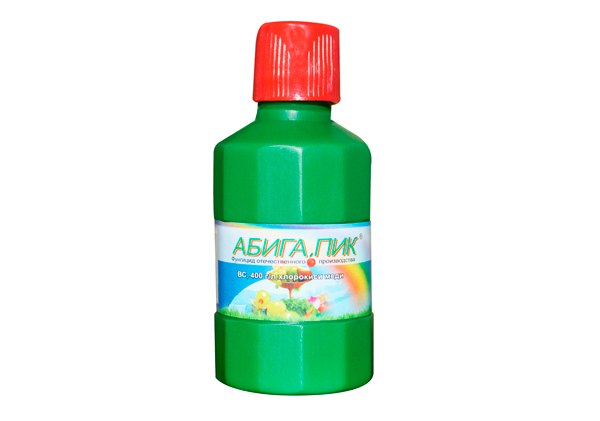
Abiga-Peak 50 g
Abiga Peak, 50 g - a universal remedy for fungal and bacterial diseases.
Active ingredient: copper oxychloride 400 g/L
Formulation: aqueous suspension
Application area: for private gardens
Purpose: Fungicide
Application instructions: Stir the product thoroughly before preparing the working solution
Dilute the required amount of the product in a small amount of water (1 liter), then transfer the solution to a sprayer tank filled 2/3 full with water. Mix the solution and add water to the required volume. Do not use iron or galvanized iron containers when preparing the solution. Use the working solution on the day of preparation. It is recommended to treat crops in calm weather.
Application Guidelines:
|
Crop |
Application rate |
Target pest |
Method, treatment time, application specifics |
Waiting period, number of treatments |
Interval between treatments |
|
Potatoes |
50 g/ 10 L of water |
Late blight, Alternaria leaf spot |
Spraying during the growing season with a 0.5% working solution. Working fluid consumption: 10 L/100 m² |
20(5) |
10–14 days |
|
Sugar beet |
Cercosporosis |
20(3) |
|||
|
Field-grown tomatoes |
Late blight, Alternaria leaf spot, brown spot |
20(4) |
|||
|
Open-field cucumbers |
50 g/ 10 L of water |
Downy mildew, anthracnose, bacterial wilt |
Spraying during the growing season with a 0.5% working solution. Working fluid consumption: 10 L/100 m |
20(3) |
|
|
Onions |
Downy mildew |
20(3) |
|||
|
Grapes |
40 g/ 10 L of water |
Mildew, anthracnose, black spot |
Spraying during the growing season. Working fluid consumption: 10 L/100 m² |
30(6) |
|
|
Apple, pear, quince |
50 g/10 L of water |
Scab, moniliosis |
Spraying during the growing season Working fluid consumption 10 L/100 m |
30(4) |
|
|
Plum, peach, apricot, cherry, sweet cherry |
40–50 g/10 L of water |
Cladosporiosis, coccomycosis, moniliosis, leaf curl |
30(4) |
|
|
|
Ornamental and flower crops |
40–50 g/10 L of water |
Rust, leaf spot |
-(2) |
|
Re-entry period for manual labor: 3 days.
Compatibility with other pesticides: Compatible with most modern pesticide formulations. Do not mix with liquids that have an alkaline reaction.
Protection period: 7–10 days. Resistant to wash-off by precipitation.
Selectivity: Has a selective effect on families of imperfect and true fungi of the class Deuteromycetes, orders Hypomycetales and Muselia Sterilia, Oomycetes, the order Peronosporales (Perenosporae) and Ascomycetes (Ascomycetes), orders Pleosporales and Phacidiales, among which the effect is most clearly evident on the class Oomycetes of the order Peronosporales, family Pytiaceae, genus Phytophthora (Phitophthora).
Onset of action: Onset of action - immediately after treatment. Maximum rate of action
Phytotoxicity: Not phytotoxic
Crop tolerance: When treatment guidelines are followed, cultivated plants exhibit a sufficiently high level of tolerance to the product.
Potential for resistance development: When the recommended application rates and usage guidelines are followed, no resistance has been observed.
Restrictions on transportation, use, and storage of the pesticide. The product is transported by all modes of transport in covered vehicles in accordance with the cargo transportation regulations applicable to that mode of transport. The product is transported in the manufacturer’s original packaging for the first 5–6 hours.
Store the product in its original, intact packaging, labeled, in utility buildings (utility rooms), in places inaccessible to children and animals, away from food products. Working with the product without personal protective equipment for the respiratory system, eyes, and skin is prohibited. Storage temperature: from a minimum of 5°C to a maximum of 35°C. It is recommended to mix the product before use. Methods for neutralizing spilled pesticide: in case of a spill, cover the spill area with absorbent materials, which should be collected and disposed of in areas designated for household waste. Do not allow the product to drain from the sprayer into water bodies or the sewer system.
Methods for the destruction or disposal of pesticides that have become unusable and/or are prohibited for use: Pesticides that have expired, as well as those that have become unusable (damaged packaging, moisture exposure, improper temperature storage, etc.), must be disposed of. The product is rendered harmless by treating it with a (7–10)% solution of soda ash, followed by burial. Methods for disposing of pesticide containers: Reuse of containers for household or other purposes is prohibited. Empty containers must be destroyed (rinse pesticide containers several times with water, then burn them or dispose of them at household waste collection sites).
Recommendations for the protection of beneficial flora and fauna. The product is low-risk to bees—hazard class 3. Compliance with the main provisions of the “Instructions for the Prevention of Bee Poisoning by Pesticides” and the following environmental regulations is required: treat plants in the morning or evening hours; perform plant treatment when wind speed does not exceed 3–4 m/s; maintain a buffer zone for bees of at least 3–4 km; restrict bee flight for at least 20–24 hours. Beekeepers must be notified 4–5 days prior to treatment. The use of the product in water protection zones of water bodies and by aerial application is prohibited. Hazard class: 3 (moderately hazardous compound).
First aid for poisoning. If it comes into contact with the skin, wash the affected area with warm water and soap. If it gets into the eyes, immediately rinse with plenty of water for at least 15 minutes and seek medical advice (it is advisable to have the label or instructions for use with you). If inhaled—ensure access to fresh air. If accidentally swallowed and signs of poisoning appear—nausea, excessive salivation, metallic taste in the mouth, vomiting, abdominal pain—call a doctor immediately or take the patient to a doctor. Before seeing a doctor, flush the stomach and give the victim a saline laxative (1–2 tablespoons of magnesium sulfate) and a diuretic.
-
Seeds
 Seeds
Buy seeds with a harvest guarantee at the "Sad-Ogorod" online store
Want to buy seeds with high germination rates at an affordable price? The "Sad-Ogorod" online store offers a wide selection of vegetable, herb, and melon seeds. Here you’ll find seeds for tomatoes, cucumbers, peppers, cabbage, carrots, beets, dill, parsley, lettuce, zucchini, eggplant, watermelon, melon, and other popular crops.
✅ Why is it beneficial to buy seeds from us?
✔ High-quality seeds from leading producers — consistent germination and high yields.
✔ A wide selection of proven varieties and hybrids for greenhouses and open fields.
✔ The ability to purchase seeds retail at wholesale prices.
✔ Fast delivery throughout Ukraine: Kharkiv, Kyiv, Dnipro, Odesa, Lviv, and other cities.
✔ Affordable prices, positive customer reviews, and professional advice.
We offer only proven seeds that have stood the test of time and are suitable for farmers, gardeners, and summer residents alike. Order seeds from the “Sad-Gorod” online store today and enjoy a bountiful, high-quality harvest!
📌 Go to the catalog and select seeds:
Seeds
Buy seeds with a harvest guarantee at the "Sad-Ogorod" online store
Want to buy seeds with high germination rates at an affordable price? The "Sad-Ogorod" online store offers a wide selection of vegetable, herb, and melon seeds. Here you’ll find seeds for tomatoes, cucumbers, peppers, cabbage, carrots, beets, dill, parsley, lettuce, zucchini, eggplant, watermelon, melon, and other popular crops.
✅ Why is it beneficial to buy seeds from us?
✔ High-quality seeds from leading producers — consistent germination and high yields.
✔ A wide selection of proven varieties and hybrids for greenhouses and open fields.
✔ The ability to purchase seeds retail at wholesale prices.
✔ Fast delivery throughout Ukraine: Kharkiv, Kyiv, Dnipro, Odesa, Lviv, and other cities.
✔ Affordable prices, positive customer reviews, and professional advice.
We offer only proven seeds that have stood the test of time and are suitable for farmers, gardeners, and summer residents alike. Order seeds from the “Sad-Gorod” online store today and enjoy a bountiful, high-quality harvest!
📌 Go to the catalog and select seeds:
- Mushroom mycelium
- Agricultural nonwoven fabric (spunbond)
-
Nets
Nets
In this section, you can select and purchase various types of nets for a wide range of applications. Vegetable nets and polypropylene bags—for packaging, storing, and transporting various agricultural products—are practical and easy to use, moisture-proof, frost-resistant, cost-effective, and environmentally friendly for use with food products. Grape cluster protection nets—allow you to keep ripening grapes on the vine for a longer period, reliably protect grapes from insect pests, wasps, and birds, while preventing the berries from rotting or being damaged by hail. Cucumber netting (trellis netting) is used to support climbing plants, guide their growth, and grow vegetables vertically in open fields, achieving cost savings through more efficient use of planting areas—yields can be doubled per square meter. Shade nets—help protect vegetable and fruit crops on land plots from the scorching sun, retain moisture in the soil, allowing plants to be watered less frequently than usual, and serve as protection for plantings by shielding them from hail, rain, wind, pests, and other external factors.
-
Everything for irrigation
 Everything for irrigation
Tools and materials used for watering plants. This section of the catalog of products for your garden and vegetable garden features high-quality universal trigger sprayers—nozzles for "Rosinka"-type PET bottles, as well as pump-type sprayers. Indispensable tools for spraying any liquids (water, fertilizer solutions, pesticides, and other aggressive substances in liquid form). Convenient and simple, they are widely used both in the home and in gardening. Watering hoses—these devices are, in most cases, simply indispensable for keeping your garden or vegetable patch in good condition. You can achieve good results with watering hoses at a very low cost: a meter of the highest-quality hose is available at a very affordable price in our agricultural store. Drip irrigation is the most effective and preferred method of watering, providing a slow and even release of water with automatic regulation. This is an advanced method of watering crops, in which water is supplied in small doses through densely branched pipes and reaches the plant roots directly via special drippers. Such watering throughout the entire growing season allows you to maintain soil moisture close to the optimal level.
Everything for irrigation
Tools and materials used for watering plants. This section of the catalog of products for your garden and vegetable garden features high-quality universal trigger sprayers—nozzles for "Rosinka"-type PET bottles, as well as pump-type sprayers. Indispensable tools for spraying any liquids (water, fertilizer solutions, pesticides, and other aggressive substances in liquid form). Convenient and simple, they are widely used both in the home and in gardening. Watering hoses—these devices are, in most cases, simply indispensable for keeping your garden or vegetable patch in good condition. You can achieve good results with watering hoses at a very low cost: a meter of the highest-quality hose is available at a very affordable price in our agricultural store. Drip irrigation is the most effective and preferred method of watering, providing a slow and even release of water with automatic regulation. This is an advanced method of watering crops, in which water is supplied in small doses through densely branched pipes and reaches the plant roots directly via special drippers. Such watering throughout the entire growing season allows you to maintain soil moisture close to the optimal level.
-
Everything for seedlings
Everything for seedlings
This section features effective tools for plant seedlings: greenhouses and seedling trays, pots, peat and coconut pellets. Seedling trays and greenhouses are a cost-effective and convenient way to grow your future harvest; they include a tray to retain moisture and a seedling tray. Seedling pots, available in various diameters and sizes, are used in gardening and floriculture and are designed for growing any plants, vegetable seedlings, and various ornamental plants. They are intended for both professionals and hobbyists. Peat pellets are an effective and simplified way to grow seedlings of vegetable and flower crops. By using this product for seedlings, you will find it convenient to use and achieve better results when growing any crops than with the conventional seedling method.
- Insecticides
- Herbicides
- Fungicides
- Plant growth stimulants
- Plant Bioprotection
- Seed treatments
- Polyethylene film
- Adhesives
- Universal plant protection products
-
Fertilizers
- "Master" Fertilizers
- "Clean Leaf" Crystal Fertilizer 900 g
- "Plantator" Fertilizers
- "Baikal" Fertilizers
- "Helatin" Fertilizers
- "Magic Mix" Fertilizers
- "Kemira Lux" Fertilizers
- Mineral fertilizers
- Humate-based fertilizers
- "Quantum" Fertilizers
- "Stimul" Fertilizers
- "Clean Leaf" Plant Care Products
- "Clean Leaf" Crystal Fertilizers 20 g
- "Avangard" Fertilizers
- "Sudarushka" and "Ryazanochka" fertilizers
- "Chisty List" crystalline fertilizers, 100 g
- "Clean Leaf" Crystal Fertilizer 300 g
- "Clean Leaf" Fertilizer in Sticks
Fertilizers
Fertilizers for your garden and vegetable garden. This product category offers our customers the best and most in-demand high-quality fertilizers for growing a wide variety of agricultural crops and plants. These are concentrated water-soluble fertilizers—granulated and universal—containing mineral, nitrogen, phosphorus, urea, sodium, calcium, and ammonium (nitrate) additives and compounds. We offer a range of fertilizers from Agrolux, Reacom, Master, and Plantafol, as well as nitrogen fertilizers such as urea and ammonium nitrate. Baikal EM1 is a concentrated, universal liquid formulation containing a large number of beneficial microorganisms that naturally inhabit the soil. The following products are in high demand and available for purchase: boric acid, potassium humate and potassium fertilizer, Ryazanochka, Sudarushka, magnesium sulfate, zinc sulfate, potassium nitrate, and the phosphorus fertilizer Superphosphate, as well as many others.
- "Master" Fertilizers
- Sprayers
- Flower pots, planters
- Gloves
- Tents
- Measures to protect against the Colorado potato beetle
- Pest control products for cockroaches, German cockroaches, bed bugs, fleas, and house and garden ants
- Protection against mosquitoes, gnats, ticks, wasps, midges, and horseflies
- Fly repellents
- Moth repellents
- Measures to protect against cabbage root maggots
- Mole control products
- Rodent Control Products
- Products for septic tanks, cesspools, and outhouses, biodegradable agents
- Household goods
- Plant protection products
- Best Sellers
- Buy seeds - bestsellers
-
Archive
- Assortment 1
- Assortment 2
- Assorted 3
- Substrates
- "Agrolyuks" Fertilizers
- Candles
- Pickling bags
- Fertilizer Application
- Seeds Professional Packaging Netherlands
- Cucumber seeds in professional packaging

- Tomato seeds in professional packaging
- Watermelon seeds in professional packaging
- Eggplant seeds in professional packaging
- Zucchini seeds in professional packaging
- Cabbage seeds in professional packaging
- Pepper seeds in professional packaging
- Carrot seeds in professional packaging
- Beet seeds in professional packaging
- Radish seeds in professional packaging
- Cucumber seeds in professional packaging
Archive
Archive of products that are currently out of stock, but if they become available, we will easily move them to the appropriate sections. If you have landed on this page and see that a product is out of stock, you may be interested in other similar or related products—please use the search function on our website or browse other sections.
- Assortment 1


